
When Two Zodiac Answers Disagree
Two Chinese zodiac answers can differ without either source changing the twelve-animal cycle. One may use Lunar New Year while another uses Lìchūn; one may translate 羊 as Goat while another says Sheep; one may preserve a local folktale detail that another leaves out.
The useful first question is not “Which website is right?” It is: Are these sources answering the same kind of question?
Start with the layer, not the verdict
Quick answer
Most disagreements fall into one of five layers: a calendar cutoff, a translation choice, a folktale variant, a regional animal list, or a later symbolic interpretation. Identify the layer first. Only then can you compare the sources fairly.
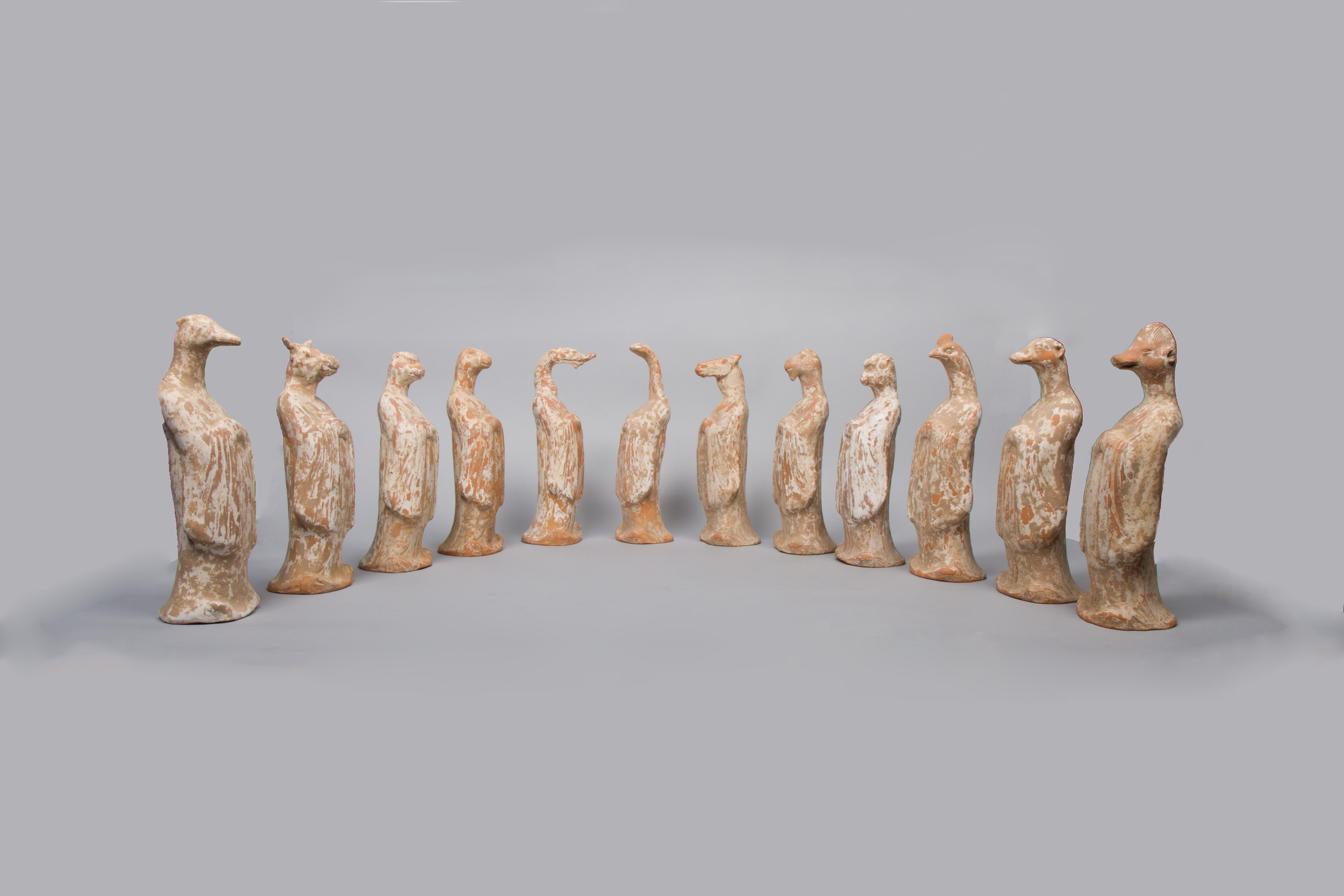
This distinction matters because the calendar system and the stories about it are not the same kind of evidence. The Metropolitan Museum of Art notes that the conventional animal order was established by the Eastern Han period and connected to a repeating calendrical cycle. That historical anchor does not require every later race story, English label, or personality reading to match word for word.
Diagnose the difference you actually saw
Use the first column to locate the disagreement. The last column takes you to the page that owns the full answer, so this guide does not turn into five overlapping tutorials.
| What differs? | Likely layer | What to check | Full guide |
|---|---|---|---|
| Two birth animals for one person | Calendar | Full birth date; Lunar New Year or Lìchūn cutoff; whether a site used January 1 by mistake | January and February boundary guide |
| Goat, Sheep, or Ram in the eighth position | Translation | The Chinese term 羊 (yáng), not just the chosen English label | Goat, Sheep, or Ram explained |
| The Cat is forgotten in one race story but pushed into the river in another | Folklore | Who told the version, where it was collected, and whether the source claims a canonical text | The Great Race legend |
| Cat replaces Rabbit, or Water Buffalo replaces Ox | Regional tradition | Which country or cultural setting the list describes | Why the Chinese cycle has no Cat |
| Different traits, matches, or predictions for the same animal | Interpretation | The rule set, date, and tradition behind the claim; whether interpretation is being presented as calendar fact | Myth, folklore, and later interpretation |
Different birth animals usually point to a calendar cutoff
A Gregorian year is not enough for someone born in January or early February. The year boundary moves because Lunar New Year does not fall on January 1. A second convention appears in some fortune-telling systems: they change the year at 立春 (Lìchūn, “Spring Commences”).
The Hong Kong Observatory gives a clean example from 2018. Lìchūn fell on February 4, 2018, while Lunar New Year fell on February 16, 2018. The Observatory uses the first day of the first Chinese calendar month for the Gan-Zhi year change; it also records that fortune-telling users may use Lìchūn. A February 10 birthday therefore sits on opposite sides of those two cutoffs.
That is a disagreement between stated conventions, not permission to pick whichever animal feels better. Check the source’s method, then use the same method consistently. If you only want the ordinary Chinese calendar sign, enter the full date in the Chinese zodiac sign checker rather than relying on a Gregorian birth year alone.
Goat, Sheep, and Ram can occupy the same place
The eighth branch animal is written 羊 (yáng). That word can cover sheep and goats, while “ram” narrows the English image to a male sheep. Translators, museums, families, and publishers do not always choose the same English label.
The label changes; the position does not. If both lists place this animal after Horse and before Monkey, you are usually looking at translation rather than a rival zodiac. The Goat–Sheep–Ram guide handles the linguistic question in full.
Two archived Cat stories show what a folklore variant is
A 2019 item in the Dartmouth Folklore Archive records a teller saying that Rat forgot to wake Cat for the race. A 2013 item in the USC Digital Folklore Archives records another telling in which Rat pushes Cat from Ox while they cross the river.
Cat misses the start
Rat promises to wake Cat, then leaves without doing so.
Cat falls during the crossing
Rat and Cat ride Ox; Rat pushes Cat into the river.
These records establish that two tellings were collected with different details. They do not establish that either one is the earliest Chinese version, a nationwide standard, or the source of the animal order. An archive entry is strongest when read for what it actually preserves: a performance, an informant context, and a date.
For the complete narrative, use the Great Race story. For the difference between a calendrical framework and the stories attached to it, see the origin guide.
A different animal list may belong to a different place
The Victoria and Albert Museum describes how the animal cycle spread through East and Central Asia and was adapted to local species and traditions. Its examples include Water Buffalo instead of Ox and Cat instead of Rabbit in Vietnam.
Calling the Vietnamese Cat an “error” would erase the location named by the source. Calling it the standard Chinese list would erase the same distinction in the other direction. Read the country label before comparing the animals.
Traits and compatibility belong to the interpretation layer
A source can be accurate about the twelve-year sequence and still offer a modern or highly specific reading of personality. The V&A notes that using a birth-year animal to characterize a person is more recent than the calendrical animal cycle itself. That makes the source’s framing important.
Calendar claims can be checked against dates and established sequences. Symbolic readings need a different label: traditional association, later interpretation, or the author’s chosen compatibility method. They should not be presented as scientific personality measurement or as a fixed verdict on a relationship.
What stays fixed, and what can move?
| Part of the answer | What is relatively stable? | What may vary? |
|---|---|---|
| Chinese animal sequence | Rat through Pig in the conventional twelve-position order; The Met places its establishment by the Eastern Han period | English animal labels and artistic depictions |
| Year assignment | A named calendar method applied consistently | Lunar New Year and Lìchūn conventions near the boundary |
| Great Race | The story explains or dramatizes the familiar order | Characters, motives, dialogue, and the Cat episode |
| Regional cycles | A recognizable twelve-year structure | Locally adapted animals |
| Traits and compatibility | The source’s own declared rules | Interpretation across schools, periods, and publishers |
Six questions to ask before trusting a zodiac source
- What question is it answering? A birth-date calculation, a translation note, a folktale, and a personality reading need different evidence.
- Does it name the cutoff? “Born in 2018” is incomplete near the start of that year unless the source states Lunar New Year, Lìchūn, or another method.
- Does it show the original term? A Chinese character such as 羊 can reveal that two English labels refer to one branch animal.
- Does it preserve context? For folklore, look for the teller, place, collection date, and collector rather than treating an unattributed retelling as an ancient transcript.
- Does it separate record from inference? An object date, calendar rule, and recorded story are evidence. A claim about what they “must mean” is interpretation.
- Can you follow the source? Prefer pages that link to a museum record, calendar authority, archive entry, or clearly named reference. Our broader list is in Sources & References.
Follow the disagreement to the right guide
Frequently asked questions
Why do Chinese zodiac websites give different animals for the same birthday?
Most often, the sources use different year boundaries or one source has used only the Gregorian birth year. Check the full birth date and the source’s stated cutoff before choosing an animal.
Does the Chinese zodiac year begin on Lunar New Year or Lìchūn?
For ordinary Chinese calendar dating, the year changes on Lunar New Year. Some fortune-telling systems use Lìchūn instead, so a careful source should name its convention.
Is Goat, Sheep, or Ram the correct Chinese zodiac animal?
All three can translate 羊 (yáng). Goat is a common choice, while Sheep or Ram may appear elsewhere; the underlying zodiac position is the same.
Is there one official version of the Great Race?
No. The Great Race is a folktale with recorded variants, not a single surviving canonical script. Compare what a source records and who told it instead of forcing every detail into one version.
Why does the Vietnamese zodiac have a Cat instead of a Rabbit?
Vietnamese tradition adapted parts of the animal cycle, including Cat where the Chinese sequence has Rabbit and Water Buffalo where it has Ox. That is a regional zodiac tradition, not a correction to the Chinese list.