
Chinese Zodiac Tattoos: Meaning, Symbolism & the Bad-Luck Question
A Chinese zodiac tattoo is usually worn for what its birth-year animal stands for in tradition — courage for the Tiger, loyalty for the Dog, abundance for the Pig, and so on. The question people ask most is whether inking your own sign is bad luck. The honest answer: tradition is split, and it’s belief rather than a rule — so it comes down to what the animal means to you.
Below is what each of the twelve animals symbolizes as a tattoo, the folk superstition worth knowing before you commit, and a piece of real history most tattoo pages skip: why body art was once taboo in China in the first place.
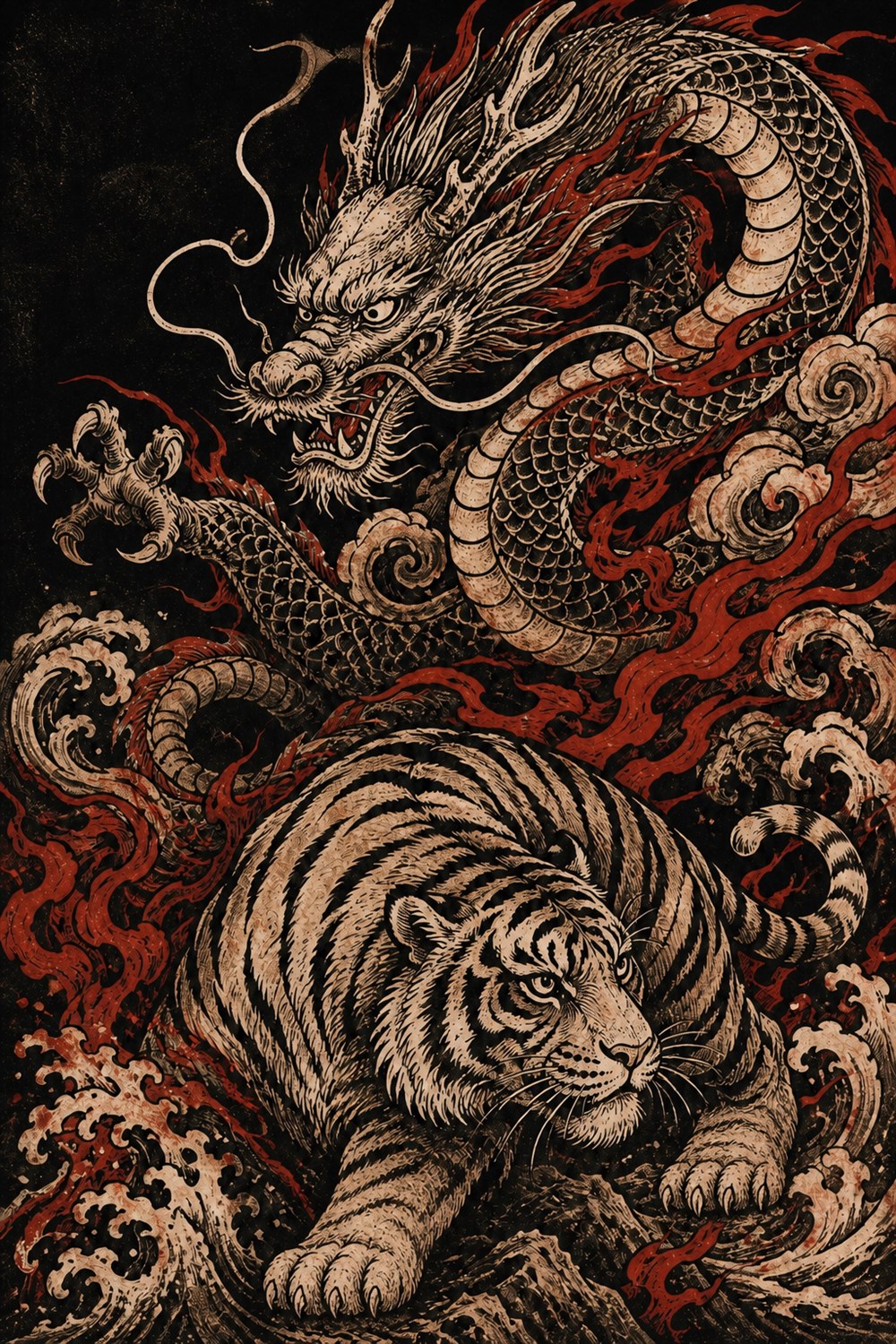
Is it bad luck to tattoo your own zodiac animal?
This is the one that stops people at the studio door, so let’s take it head-on. In Chinese folk belief there are two opposite readings, and both are old:
- The cautious view. Your birth-year animal is tied to your fate, so permanently marking it on your skin is said by some to “fix” or disturb the natural flow of your fortune — the idea being that you shouldn’t pin down something that’s meant to move with you.
- The protective view. Just as often, the animal is treated as a personal guardian — carrying its image is thought to keep its qualities (and its luck) close. Tigers and dragons in particular have long been worn this way, as protective figures.
Neither is a fixed rule, and there’s no single “Chinese” verdict — attitudes vary by region, family, and generation. Treat it as folklore, not a warning label. Most people who get the tattoo choose it because the animal means something to them, and that’s the part that actually lasts.
The short version
One tradition says don’t tattoo your own fate-animal; another says wear it as a guardian. It’s belief, not a rule — pick based on meaning, not superstition.
What each of the 12 animals means as a tattoo
Every sign carries a traditional symbolism, and that’s usually what a wearer is signalling. These are the meanings as Chinese tradition frames them — cultural symbols, not personality facts or predictions.
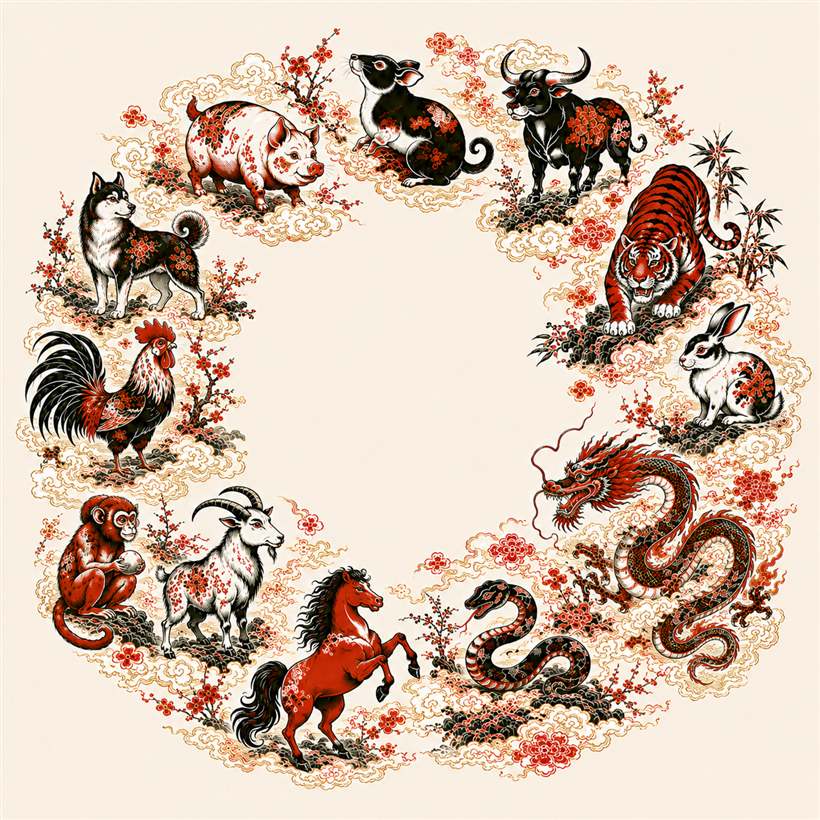
| Animal | What it traditionally symbolizes as a tattoo |
|---|---|
| 鼠 Rat | Quick wit, resourcefulness, and prosperity — first of the cycle, the clever survivor. |
| 牛 Ox | Strength, patience, and honest hard work; steadiness that doesn’t quit. |
| 虎 Tiger | Courage and protection — a classic guardian motif said to drive off evil. |
| 兔 Rabbit | Gentleness, grace, and good fortune; long linked with the moon. |
| 龙 Dragon | Power, luck, and dignity — the most auspicious sign, and the most-tattooed. |
| 蛇 Snake | Wisdom, mystery, and transformation — the shedding of skin as renewal. |
| 马 Horse | Freedom, energy, and a spirited, independent streak. |
| 羊 Goat | Peace, kindness, and a gentle, artistic nature. |
| 猴 Monkey | Cleverness, humor, and the knack of adapting to anything. |
| 鸡 Rooster | Confidence, honesty, and vigilance; in folk custom, a warder-off of bad spirits. |
| 狗 Dog | Loyalty, protection, and sincerity — the friend who stays. |
| 猪 Pig | Abundance, generosity, and an easy, honest warmth. |
Not sure which animal is yours? It comes from your birth year on the lunar calendar — run it through the zodiac calculator, and mind the boundary if you were born in January or February (more on that below).
Tiger and Dragon: the classic protective tattoos
If one pattern runs through Chinese tattoo tradition, it’s that the Tiger and the Dragon are the two most-worn animals — and not only because they look striking. Both are read as powerful, protective figures. The Tiger is the traditional guardian said to chase off evil and misfortune; the Dragon carries luck, authority, and dignity. Even people who aren’t born in those years often choose them for that protective meaning, which is one reason the “don’t tattoo your own sign” caution matters less than it sounds — plenty of wearers are carrying an animal that isn’t theirs by birth at all.
Dragon–Tiger together
Paired dragon-and-tiger designs are a long-standing motif in Chinese art, read as balance — two great powers held in tension rather than one defeating the other.
Folk rules for powerful tattoos: dragons, tigers & “carrying” the image
Beyond the twelve animals, Chinese tattoo tradition carries a whole set of jiǎngjiu (讲究) — unwritten folk rules — about its most powerful motifs. They all rest on one idea: a strong image has to be “carried” (镇得住, zhèn de zhù). Wear one your standing can’t match, the belief goes, and it turns on you instead of protecting you. None of it is fact — it’s folklore and old tattoo-shop craft-lore — but it’s exactly the kind of thing worth knowing before the needle starts.
The dragon: don’t dot the eyes
The best-known rule comes straight out of the idiom 画龙点睛 (“dotting the eyes to finish the dragon”) — the old legend of a painter whose dragons flew off the wall the moment he added their eyes. So many people leave a tattooed dragon’s eyes undotted, or at least never in red, the color tradition says “wakes” the dragon and invites trouble. A few more dragon rules you’ll hear:
- Claws count. Five claws were the emperor’s alone; three is tied in folk talk to the underworld — so a four-clawed dragon is the usual safe choice.
- One dragon per person. You don’t collect them; a single dragon is said to be enough to carry.
- It should rise, not fall. A dragon is drawn ascending — a downward-facing dragon is read as the bad omen.
Related, and just as popular: a koi swimming upstream — from the legend of the carp that leaps the Dragon Gate (鲤鱼跃龙门) and turns into a dragon — worn for grit and transformation, and a softer way to carry dragon symbolism.
The tiger: which way is it walking?
With a tiger, the pose changes the whole meaning — which is why tradition warns against wearing both versions at once:
| Type | Pose & look | What tradition reads into it |
|---|---|---|
| 上山虎 Ascending tiger | Head up, climbing, often with pine and moon — calm and settled. | Heading home, hanging it up, “washing your hands” of the fight — peace and safe passage. |
| 下山虎 Descending tiger | Coming down in a hunting crouch, fierce, often among snow and rock. | Setting out to make your name — the fighting, evil-warding tiger; the bolder, heavier choice. |
One more: a tattooed tiger is meant to look well-fed and strong. A gaunt “hungry tiger,” the folk saying goes, is the one that invites disaster rather than guarding against it.
The same “can you carry it?” logic extends to weightier, non-zodiac images too — the war-god Guan Yu is the famous one tradition says only certain people should wear — but among the zodiac animals, it’s the dragon and tiger where these rules really live.
Take it as lore, not law
These are folk beliefs and studio traditions, not rules anyone has to follow — a good artist will happily ink a red-eyed dragon if that’s what you want. But knowing the 讲究 is the difference between wearing a design and understanding the culture behind it.
A bit of real history: why tattoos were once taboo in China
Here’s the part most tattoo guides leave out, and it’s worth knowing before you wear Chinese symbolism on your skin. For much of imperial history, tattooing wasn’t decoration — it was punishment. Marking the face or body with indelible ink, called 墨 (mò) or 黥 (qíng), was one of the “Five Punishments,” used to brand criminals so their offense followed them for life. On top of that, Confucian values held that your body is a gift from your parents to be kept whole, so deliberately marking it carried real social stigma.
That’s the backdrop to the single most famous tattoo in Chinese culture. As the legend is usually told, the Song-dynasty general Yue Fei (岳飞) had four characters — 精忠报国, roughly “serve the country with utter loyalty” — tattooed on his back by his own mother, so he’d carry the vow into battle. In a culture that treated tattoos as shameful, turning one into a mark of honor is exactly why the story stuck.
None of this should stop anyone from getting a zodiac tattoo today — attitudes have changed enormously, in China as everywhere. But it’s the genuine cultural weight behind the ink, and knowing it is the difference between borrowing a symbol and understanding it.
From taboo to trend: how China sees tattoos today
The old Confucian objection — that your body is a gift from your parents to keep whole — has faded a lot for younger generations. But there’s a more recent chapter most people outside China never hear about, and it still shapes how a tattoo reads there.
For much of the late twentieth century, a visible tattoo in mainland China signalled one thing: the underworld. Tattoos were read as the mark of gangsters and triad members — of trouble — and plenty of people would quietly keep their distance from anyone who had one. Hong Kong triad films poured fuel on that image, above all Young and Dangerous (古惑仔, 1996), whose triad heroes turned the whole look into something a generation of kids wanted to copy.
One dot, and a walloping
I still remember a classmate in primary school who got swept up in those films and tried to tattoo himself with a sewing needle and ink. He managed a single tiny dot before the pain stopped him cold — and that one speck was enough to get him caught by the teacher and soundly told off. That was the mood of the time: even a dot of ink was something to be scolded out of you.
Things have changed enormously since. As China opened up and global culture mixed in, tattoos went mainstream, especially among younger people, and studios are everywhere now. Even so, a large or highly visible piece can still draw a slightly wary look — the old association hasn’t fully worn off. It’s worth knowing that Chinese zodiac ink can land differently in China than it does in the West, and that context is part of what the symbol carries.
It shows up in the rules, too. Some government, military, and police jobs in China still set tattoo limits: face or neck tattoos — or a piece past a few centimetres on a visible spot — can disqualify you from military conscription, the police, or a civil-service post that carries physical requirements. So for a young person weighing a tattoo, it isn’t only about how it looks; it can quietly affect which doors stay open.
Family and couple zodiac tattoos
One of the warmer ways people use these signs is to wear someone else’s. Grouping the birth-year animals of your children, your parents, or a partner into one piece is a common, entirely un-taboo way to carry a family with you — a small row of animals that reads as “these are my people” without a word of text. Couples do the same with their two signs, sometimes alongside a note on whether the pair is a traditional match.
If you’re going that route, it’s worth getting each person’s animal right first — and the January/February boundary trips up more of these than you’d expect. Curious how two signs read together in tradition? The zodiac compatibility guide walks through the pairings.
Before you get inked: get the sign right
The one practical mistake worth avoiding has nothing to do with luck: tattooing the wrong animal. A Chinese zodiac year doesn’t start on January 1 — it starts at Lunar New Year, which lands somewhere between late January and mid-February. So anyone born in that window can easily belong to the previous year’s animal.
The January–February trap
Born in January or early February? Don’t assume your sign from the calendar year — a permanent tattoo is the worst place to get this wrong. Check the exact cutoff with the January–February boundary guide and confirm your animal on the calculator first.
Beyond that, the usual sense applies: symbolism aside, a tattoo is a personal design choice. Placement, size, and style — a small line-art animal or a full traditional dragon back-piece — are yours to decide, and no tradition dictates them. The lore is there to add meaning, not rules.
Chinese zodiac tattoo FAQ
Is it bad luck to get your own Chinese zodiac sign tattooed?
Tradition is split. One folk belief says permanently marking your own birth-year animal can disturb the flow of your fate; another treats that animal as a personal guardian you carry for protection. It’s belief, not a rule — most people choose based on what the sign means to them.
What does a Chinese zodiac tattoo mean?
It usually stands for the traits its birth-year animal symbolizes in tradition — courage for the Tiger, loyalty for the Dog, wisdom for the Snake, abundance for the Pig, and so on. The meaning is symbolic and cultural, not a prediction.
Which Chinese zodiac animal is the most popular tattoo?
The Dragon and the Tiger, by a wide margin. Both are read as powerful, protective figures in Chinese tradition, which is why they have long been favorites in Chinese tattoo art — often worn even by people not born in those years.
Can I get my family members’ zodiac animals tattooed together?
Yes. Grouping the birth-year animals of children, parents, or a couple into one piece is a common way to represent a family, and nothing in tradition forbids it. Just confirm each person’s animal first — birthdays near Lunar New Year are easy to get wrong.
Were tattoos taboo in traditional China?
For much of imperial history, yes. Tattooing (墨 / 黥) was one of the Five Punishments used to brand criminals, and Confucian values treated the body as a gift from one’s parents to keep whole — so body art carried stigma. The famous honorable exception is the legend of Yue Fei’s back tattoo.
Do tattoos carry a stigma in China today?
Less than they once did. For much of the late twentieth century a visible tattoo in mainland China read as a mark of the underworld — gangsters and triads — an image cemented by Hong Kong triad films like Young and Dangerous (1996). Tattoos are mainstream among younger people now, but a large or very visible piece can still draw a slightly wary look.
Why do some Chinese dragon tattoos have no eyes?
It comes from the idiom 画龙点睛 — “dotting the eyes finishes the dragon” — and the legend of painted dragons that flew away the moment their eyes were added. In folk belief, completing a tattooed dragon’s eyes, especially in red, “wakes” it and invites trouble, so some people leave them undotted. It’s tradition, not a rule.
How do I find my Chinese zodiac animal before tattooing it?
Your sign comes from your birth year on the lunar calendar — but if you were born in January or early February, check the boundary, because the zodiac year doesn’t begin on January 1. Confirm it on the calculator before you commit to permanent ink.
Editorial note: The historical points here — punitive tattooing (墨 / 黥) as one of the Five Punishments, the Confucian objection to marking the body, and the legend of Yue Fei’s back tattoo — are documented cultural history you can check against standard sources (see our sources & references). The animal meanings and the “bad luck” superstition are symbolic tradition and folk belief, shared for cultural interest. This page is not fortune-telling, and it isn’t medical, legal, or personal advice — a tattoo is your own decision.
Thinking of inking your own sign?
Before it’s permanent, it’s worth knowing your sign exactly — the animal, its element, and what tradition actually says about it. A personalized reading lays that out from your real birth date, so the symbol on your skin is the right one.