
Ox and Tiger Compatibility: Neighbors on the Calendar, Unlinked in the Branch Schemes
Ox and Tiger have no direct relationship in the classical branch system — no harmony and no clash. Most English compatibility pages notice that much, score the pair somewhere around a middling number, and then fall back on the same character story: the patient, stubborn Ox against the bold, restless Tiger. The score and the story are a modern overlay. What the branch tradition actually says about these two is quieter and more interesting: they are the two signs that sit side by side at the turn of the year.
Run against the seven standard branch schemes this site checks, Ox (丑) and Tiger (寅) touch in none of them — not harmony, not conflict, not harm, punishment, or break. They are a genuinely neutral pair, where nothing in the calendar decides the match either way. But the two branches are immediate neighbors, 丑 then 寅, and that adjacency carries real history: in the old reckoning the Ox’s month and the Tiger’s month each opened one of the three ancient new-years, and the Tiger’s month still opens the farming calendar in use today. This page checks the pair against all seven schemes, then traces what their place on the calendar — not their tempers — actually means.
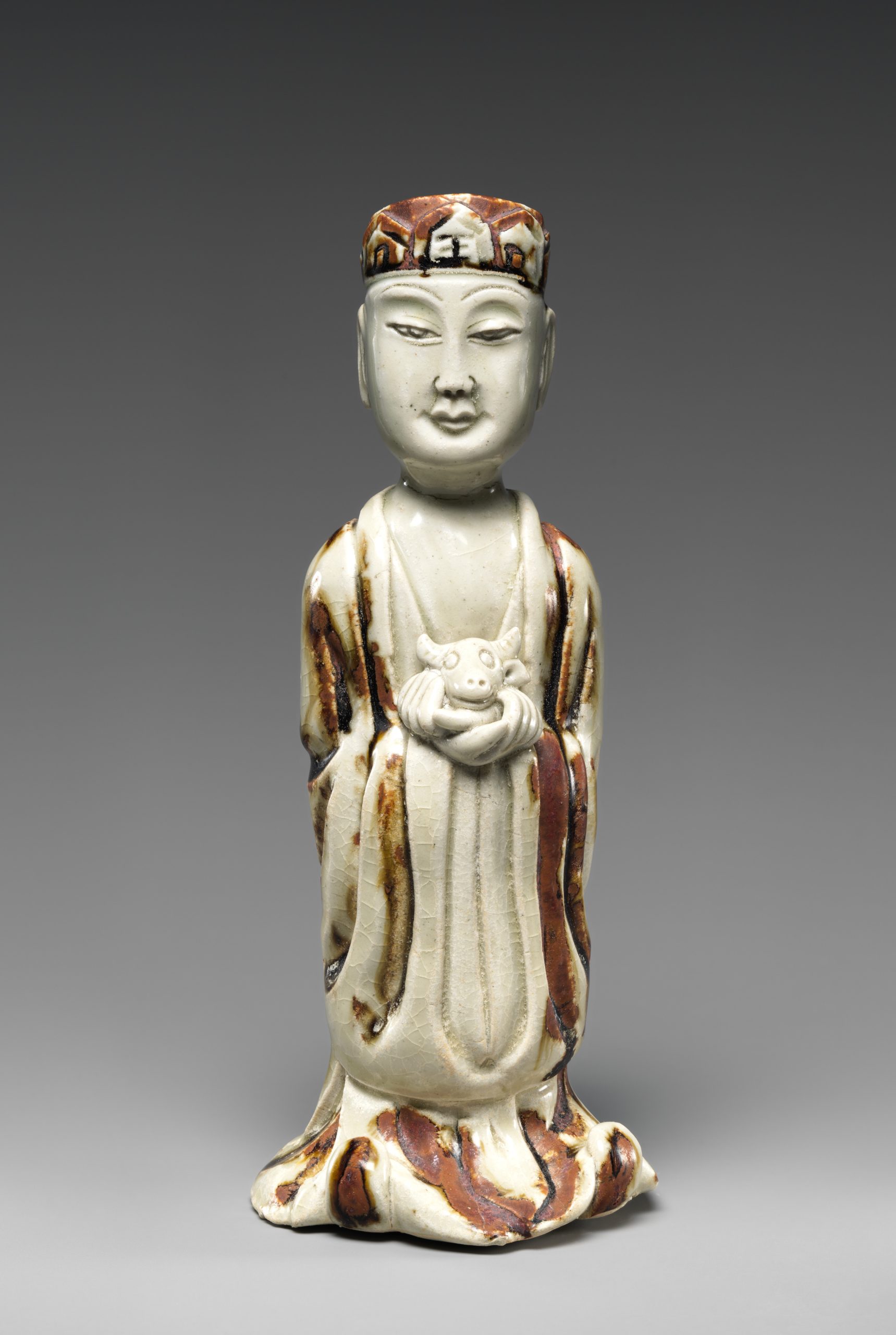
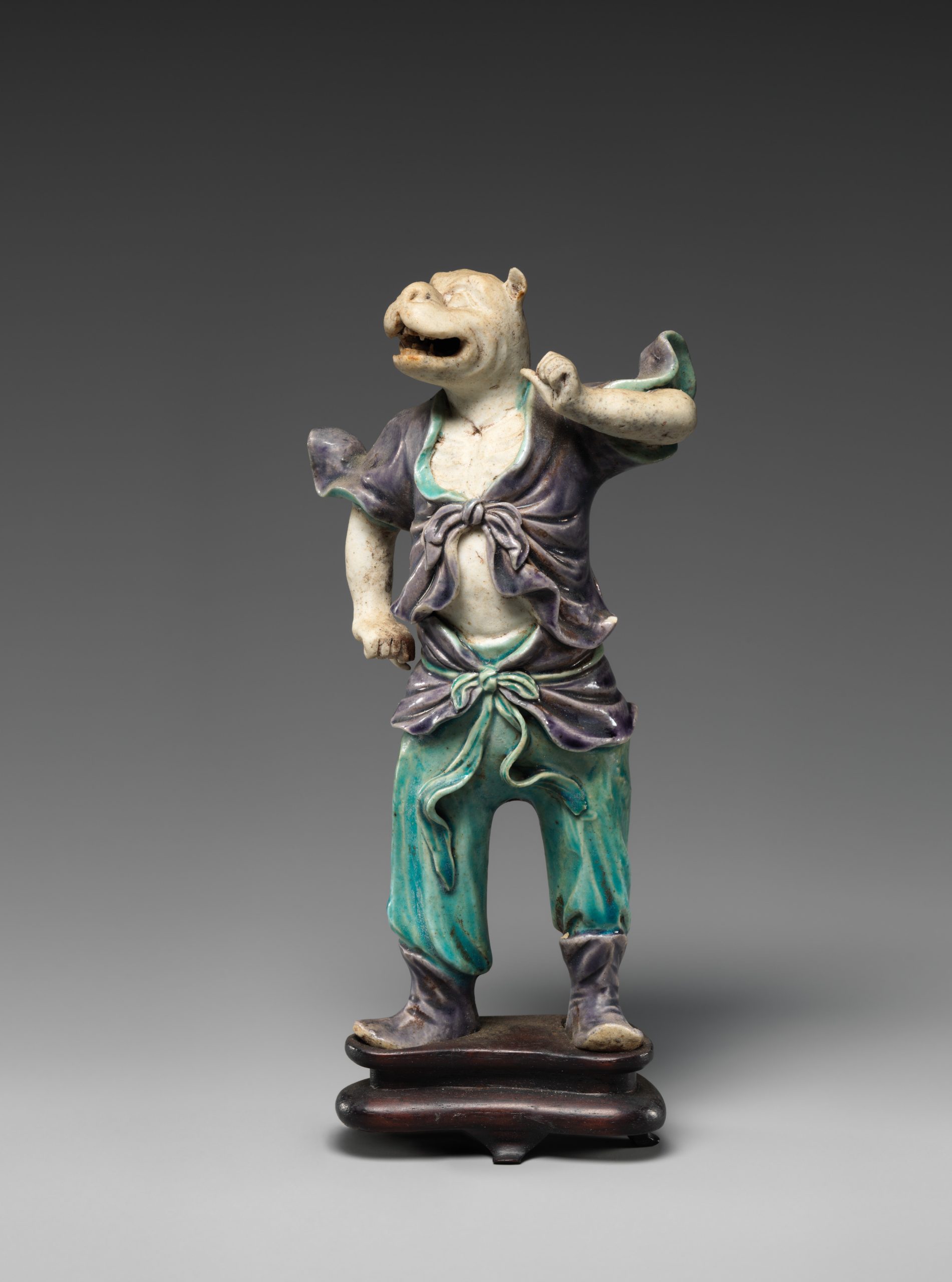
No direct tie in any of the seven schemes
Each zodiac animal maps to one of the twelve Earthly Branches (地支), the markers used in the traditional calendar and in BaZi — the birth-chart method read from a person’s year, month, day, and hour. Words like “harmony,” “clash,” and “harm” are the technical labels classical texts attach to particular branch pairings. They describe a structural relationship between two calendar signs. Here is Ox (丑) and Tiger (寅) run against the same seven branch schemes this site applies to every pairing page.
| Branch relationship scheme | Names Ox + Tiger? | Where each sign actually sits |
|---|---|---|
| Six Harmonies (六合) | No | Ox pairs with Rat (子丑合); Tiger pairs with Pig (寅亥合) — two different harmony couples |
| Three Harmonies (三合) | No | Ox belongs to the metal trio 巳酉丑 (Snake-Rooster-Ox); Tiger belongs to the fire trio 寅午戌 (Tiger-Horse-Dog) — two different trines |
| Three Meetings (三会) | No | Ox sits in the winter group 亥子丑 (north / water); Tiger sits in the spring group 寅卯辰 (east / wood) — adjacent seasons, different groups |
| Six Conflicts (六冲) | No | Ox clashes with Goat (丑未冲); Tiger clashes with Monkey (寅申冲) |
| Six Harms (六害) | No | Ox’s harm partner is Horse (丑午相害); Tiger’s is Snake (寅巳相害) |
| Punishments (刑) | No | Ox sits in the 丑戌未 punishment set (with Dog and Goat); Tiger sits in the 寅巳申 punishment set (with Snake and Monkey) — different sets, neither names the other |
| Mutual Breaks (相破) | No | Ox’s break partner is Dragon (辰丑相破); Tiger’s is Pig (寅亥相破) |
The two signs that start two ancient years
The interesting thing about Ox and Tiger is not a relationship between them — there isn’t one — but where they fall. Ox is the second branch, 丑; Tiger is the third, 寅; they run consecutively. And those two branches, together with the Rat’s 子 before them, are the three that classical calendar scholarship names as new-year starting months for the ancient dynasties. The Shiji “Treatise on the Calendar” records it compactly — 夏正以正月,殷正以十二月,周正以十一月 — the Xia beginning the year in the first month (寅), the Yin/Shang in the twelfth (丑), the Zhou in the eleventh (子). This retrospective framework is called the 三正 (sānzhèng), the “three standards”: a traditional classification of dynastic new-year months, not a verified account of exactly how each dynasty’s calendar was run.
- Zhou calendar — 建子 (zǐ, Rat month): the year began at the eleventh month, the one containing the winter solstice.
- Shang / Yin calendar — 建丑 (chǒu, Ox month): the year began at the twelfth month.
- Xia calendar — 建寅 (yín, Tiger month): the year began at what is now month 1 — and this is the standard the later calendar follows. The Chinese lunisolar farming calendar still “builds on 寅” (建寅), which is why the Tiger’s month is month 1 and Chinese New Year opens the Tiger’s month, not the Ox’s.
The upshot is that Ox and Tiger are the two signs whose months, in this tradition, opened two of the three dynastic years — the Ox’s month the Shang (Yin) year, the Tiger’s month the Xia year, whose 建寅 sequence the later lunisolar calendar still follows. An older interpretation ties the three branches to Heaven, Earth, and Humanity: 子为天正,丑为地正,寅为人正 — Rat the “heaven standard,” Ox the “earth standard,” Tiger the “man standard.” This threefold reading is not a late invention: it is recorded in the Han-era Han Shu “Treatise on the Calendar” and restated by later scholars — the Song philosopher Zhu Xi (天开于子,地辟于丑,人生于寅) and the Qing writer You Tong among them. Read that way, Rat–Ox–Tiger (子丑寅) form a small complete unit at the head of the cycle: sky, ground, and the human year still in use. It is a piece of calendar history, framed here as traditional scholarship rather than fortune — and it is the real substance behind these two neighbors, the thing the percentage-score pages leave out.
Winter into spring: the Ox month hands off to the Tiger month
Because the surviving calendar builds on 寅, the handoff from Ox to Tiger is the handoff from the end of one year to the start of the next — and from winter to spring. The Ox’s branch 丑 is the last month of winter, the deep-cold twelfth month; the Tiger’s branch 寅 is the first month of spring. Here two senses of “the 寅 month” need separating. In the traditional lunar month sequence, the first month (正月) is the 寅 month — that is the 建寅 convention above. In the solar-term system used for BaZi month pillars, the 寅 month instead begins at the exact moment of 立春 (Lìchūn, “spring begins,” around February 3–5), the solar term that opens the farming year. The two boundaries usually fall close together, but they are not necessarily the same day: in 2027, for instance, Lìchūn lands on February 4 while Lunar New Year is February 6, so for two days the solar 寅 month has already begun while the lunar calendar is still in the old year’s twelfth month. An old saying marks the solar turn by the stars: 斗柄回寅天下春 — “when the handle of the Dipper swings back to 寅, spring comes to all the world.” The Tiger’s month is where the year is reborn; the Ox’s month is the cold that comes right before it.
That seam left a small custom on each side. On the Ox side, early-spring village ritual included 鞭春牛 (biān chūnniú), the “whipping of the spring ox” — a clay or paper ox struck at the start of spring to rouse the land for plowing, a rite that tied the ox directly to the Lìchūn moment that falls in the neighboring Tiger month. It is a recorded seasonal custom, not a relationship rule; but it is one more way the tradition places these two neighbors on either side of the year’s single most important hinge.
A familiar Ox-and-Tiger idiom — but not a compatibility rule
Ox and Tiger have no matchmaking couplet of their own. The sources reviewed for this article did not establish a widely attested Ox-Tiger-specific matchmaking rhyme: some well-known auspicious matchmaking rhymes list Six Harmonies (六合) pairs, while one widely circulated avoidance rhyme lists Six Harms (六害), not Six Clashes (六冲). But two everyday Chinese idioms do bring an ox and a tiger into the same scene. The best known is 初生牛犊不怕虎 (chū shēng niú dú bù pà hǔ), “a newborn calf is not afraid of the tiger,” said of a young person too inexperienced to fear a danger a veteran would respect; another is 九牛二虎之力 (jiǔ niú èr hǔ zhī lì), “the strength of nine oxen and two tigers,” used for an enormous effort. Neither is a compatibility saying. The calf idiom has a literary pedigree, but the modern form is a later variant of it: in chapter 74 of the Ming novel Romance of the Three Kingdoms, Guan Ping speaks the older wording 初生之犊不惧虎 (“a newborn calf does not fear the tiger”), which colloquial usage reshaped into today’s 初生牛犊不怕虎. What these phrases share is that these two familiar images treat the pair as calf and predator, or as raw units of strength — a fair shorthand for the temperamental gap the modern compatibility pages describe, without pretending the branches rank the pair.
Check that these are really the two signs
Ox and Tiger are back-to-back years, which makes the Lunar New Year boundary especially easy to trip on here. Getting it wrong does not always land on the other sign of this pair: it can turn an apparent Tiger into an Ox — as with January 2022 births — but it can equally turn an apparent Ox into the Rat of the year before, as with early 2021 births. The correct sign always depends on the actual Lunar New Year date, not January 1. Under the lunar convention this site follows, it turns at Chinese New Year, a date that wanders between roughly January 21 and February 20, so a January or early-February birthday can still sit in the year before. The two most recent Ox and Tiger years show the trap cleanly. The 2021 Ox year (辛丑, Metal Ox) did not open until February 12, 2021; a birthday from January 1 to February 11 that year reads as a 2020 Rat (庚子), not an Ox. The 2022 Tiger year (壬寅, Water Tiger) opened earlier, on February 1, 2022, so a January 2022 birthday is not a Tiger but a 2021 Ox — the pairing folding back into itself across the line.
A second convention complicates it further: many BaZi readers begin the astrological year not at New Year but at Lìchūn (立春), the “spring begins” solar term near February 3–5 — which marks the beginning of the solar-term 寅 month. Lìchūn lands at an exact clock moment rather than across a whole calendar day, so a birth right on that date turns on the hour and place of birth. When either person was born in January or the first half of February, pin the sign down against the real year before trusting the pairing; the compatibility hub’s calculator settles both.
Ox’s side: the last branch of winter
Ox is the second branch (丑); this site’s Ox profile and Year of the Ox page read the sign around steadiness, patience, and a long, methodical kind of effort. Against Tiger there is no branch link in any of the seven schemes — the two simply do not meet in the classical system. Ox’s own close ties run elsewhere: its Six Harmonies partner is the Rat (子丑合, covered on Rat and Ox), and its Three Harmonies trio is the metal group with Snake and Rooster (巳酉丑). On the calendar, 丑 is the deep-winter twelfth month — the month whose branch once opened the Shang year, and the cold that gives way to the Tiger’s spring.
Tiger’s side: the branch the year still begins on
Tiger is the third branch (寅); this site’s Tiger profile and Year of the Tiger page center the sign on boldness, drive, and a taste for the front foot. Against Ox there is again no branch tie. Tiger’s close ties are its own: its Six Harmonies partner is the Pig (寅亥合), and its Three Harmonies trio is the fire group with Horse and Dog (寅午戌, a different kind of link covered on Tiger and Horse). What distinguishes 寅 is calendrical rather than relational: it names the first lunar month in the 建寅 convention, while in the solar-term system used for BaZi, the 寅 month begins at Lìchūn. These two boundaries do not always coincide.
What that leaves for the actual pairing
Stripped of the score and the stock character sketch, the pairing comes to this: Ox and Tiger are a neutral pair with no direct relationship in any of the seven branch schemes checked here. The site’s separate Ox and Tiger profiles describe character — Ox steady, cautious, and persistent; Tiger bold, quick, and restless — and a reader may well see the friction the modern pages harp on, two strong-willed signs who can both dig in, or may see the Ox’s ballast steadying the Tiger’s dash. Either is an interpretation laid over a blank classical slate.
Compare two Year Pillars
Everything above is the general pattern for the sign pairing. For two specific people rather than a generic reading, these go further:
Couple Compatibility Report — Two Year Pillars side by side, seven traditional relationship layers and the current lunar year, with cultural reflection prompts in a PDF. See the report →
Personalized Reading — Your Year Pillar, seven traditional relationship layers and the current lunar year, with cultural reflection prompts in a PDF. See the reading →
Common mistakes
- Reading “no relationship” as “bad match.” Ox and Tiger meet in none of the seven branch schemes. A neutral pair is not a failing grade — it means the classical system does not weigh in either way, so the outcome is not written into the calendar.
- Trusting a percentage score. The pages that rate Ox-Tiger with a figure — 59, 65, or 68 out of 100, the number varies by site — are attaching a modern score to a pairing the classical tradition does not rank at all. The figure is an overlay, not a classical output.
- Mistaking “both stubborn” for a branch rule. The clash-of-tempers story (methodical Ox, impulsive Tiger) is a characterization drawn from the two animals’ profiles. It is not a Six Conflicts or Six Harms relationship — the branches are not opposed; Ox clashes with Goat and Tiger with Monkey, not with each other.
- Assuming a January-born “Tiger” or “Ox” is that sign. The 2022 Tiger year began February 1 and the 2021 Ox year began February 12, so an early-year birthday can land on the neighboring sign — a January 2022 “Tiger” is a 2021 Ox. Check the boundary before reading the match.
- Collapsing the calendar history into a love rule. That Ox and Tiger open two of the three ancient new-years (建丑, 建寅) is real calendar history and a genuine point of interest — but it describes where the two months sit, not whether two people born under the signs are compatible.
Ox and Tiger compatibility: FAQ
Are Ox and Tiger compatible in the Chinese zodiac?
Ox and Tiger have no direct relationship in any of the seven branch schemes checked here — no harmony and no clash, harm, punishment, or break. They are a neutral pair, the same shape as Dragon-Snake: the classical system does not bind them together or set them against each other, so nothing about the match is decided in advance.
Do Ox and Tiger clash in the Chinese zodiac?
No. In the Six Conflicts (六冲), Ox clashes with Goat (丑未冲) and Tiger clashes with Monkey (寅申冲) — not with each other. They are also not paired in Six Harms, Punishments, or Mutual Breaks. The “both too stubborn” friction some pages describe is a reading of the two animals’ personalities, not a branch-level clash.
Why are Ox and Tiger said to have no relationship?
Because their branches, 丑 (Ox) and 寅 (Tiger), are not paired in any of the seven schemes. Ox’s harmony partner is the Rat and its trine is 巳酉丑 (metal); Tiger’s harmony partner is the Pig and its trine is 寅午戌 (fire). The two sit in different harmony couples, different trines, and different seasonal groups, and no clash, harm, punishment, or break rule connects them — so the branch tradition is simply silent on the pair.
What do Ox and Tiger have to do with the calendar?
They are adjacent branches — 丑 then 寅 — and each opened an ancient new-year. In the “three standards” (三正) tradition, the Shang calendar began the year at the Ox month (建丑) and the Xia calendar at the Tiger month (建寅); the Xia 建寅 sequence is the one the later lunisolar calendar follows, so it still builds on 寅 and Chinese New Year falls in the Tiger’s month. A traditional reading calls Rat-Ox-Tiger (子丑寅) the heaven, earth, and man “standards.” It is calendar history and cultural interest, not a compatibility rule.
Is a January or early-February birthday a problem for this reading?
It can be, and here it is especially easy to trip on because Ox and Tiger are adjacent years. Under the lunar-zodiac convention used here, the animal year changes at Chinese New Year (roughly January 21–February 20, varying yearly). The 2021 Ox year began February 12, 2021, so a birthday before then is a 2020 Rat; the 2022 Tiger year began February 1, 2022, so a January 2022 birthday is a 2021 Ox, not a Tiger. Many BaZi practitioners instead use the exact moment of Lìchūn (around February 3–5). Births in those windows should be checked against the relevant year’s boundary.
Is this page a substitute for a personalized reading?
No. It explains the general cultural pattern for the Ox-Tiger pairing as a symbolic tradition — not a prediction, and not medical, financial, or relationship advice. For two specific birth charts, see the Couple Compatibility Report linked above.
Where to go next
Editorial note
Sources are separated by claim so the classical and later layers stay distinct. The seven branch-relationship schemes checked here follow this site’s own reference pages: the Six Harmonies pairing and the clash/harm/punishment/break relationships follow the Six Harmonies and enemies-and-friends reference pages; the Three Harmonies trios and the Three Meetings seasonal groups follow the Three Harmonies page. Calendar history (三正): that the Xia, Shang, and Zhou calendars are associated with new-year months of 寅 (Tiger), 丑 (Ox), and 子 (Rat) respectively is a traditional, retrospective framework, not a verified account of how each dynasty’s calendar actually ran. The Shiji “Treatise on the Calendar” states it directly (夏正以正月,殷正以十二月,周正以十一月), and later commentary names it the “three standards, three lineages” (三正,三統也, Zhang Shoujie’s Shiji Zhengyi); it is cross-checked here against an independent calendar reference (chinaknowledge.de). The heaven–earth–man reading of 子丑寅 (子為天正,丑為地正,寅為人正) is not a late invention: it is recorded in the Han Han Shu “Treatise on the Calendar” and restated by later scholars, including the Song Zhuzi Yulei (天開於子,地闢於丑,人生於寅) and the Qing writer You Tong. It is presented as traditional scholarship, not as fortune. Seasonal and star markers: 丑 as the last winter month and 寅 as the first spring month carrying Lìchūn follow the standard solar-term calendar; 斗柄回寅天下春 (“the Dipper’s handle returns to 寅, spring comes”) is cited as a traditional saying. Customs and idiom: 鞭春牛 (the early-spring “whipping of the spring ox”) is cited as a recorded seasonal custom tying the ox to Lìchūn, not as a relationship rule; the modern idiom 初生牛犊不怕虎 (“a newborn calf does not fear the tiger”) is a later colloquial variant of the wording Guan Ping speaks in Romance of the Three Kingdoms chapter 74 — 初生之犊不惧虎 — verified verbatim on Wikisource; a second ox-and-tiger idiom, 九牛二虎之力 (“the strength of nine oxen and two tigers”), is cited as a common set phrase for great effort. Images: the two zodiac figures are Metropolitan Museum of Art Open Access (CC0) holdings — the Ox a Yuan-dynasty glazed stoneware figure (acc. 1994.605.60) and the Tiger a Qing Kangxi-period Jingdezhen porcelain figure (acc. 1992.100.2); they are two separate works shown side by side to represent the two signs, not a single matched set.