
Rabbit and Dog Compatibility: The Six-Harmonies Pair Linked at a Single Point
Rabbit and Dog are a Six Harmonies pair — 卯戌合 — the relationship many English-language compatibility pages turn into high percentage scores and a loyal-Dog / gentle-Rabbit personality story. The Six Harmonies classification is traditional; “Secret Friends” is an English gloss for it, and the percentage ratings are a modern popularization. What those pages leave out is what Six Harmonies actually is, where the 卯戌 link comes from, and what makes this particular pair one of the two cleanest single-link pairs across the seven schemes checked here.
Across the seven standard branch schemes checked on this site, Rabbit (卯) and Dog (戌) have exactly one direct pairwise relationship — the Six Harmonies link — and sit apart in every other one. They are not in the same seasonal group, not in the same element trine, and no clash, harm, punishment, or break rule touches them. That single-link shape is the opposite of pairs like Horse and Goat, whose Six Harmonies link happens to sit inside a shared season; here the bond stands alone, crossing from mid-spring to late autumn. This page traces the link back to its source in the calendar texts, explains the Fire the pair is said to form — a reading with more internal logic than most — checks the pair against all seven branch schemes, and reads the one real tie at its true size rather than inflating it into a score.
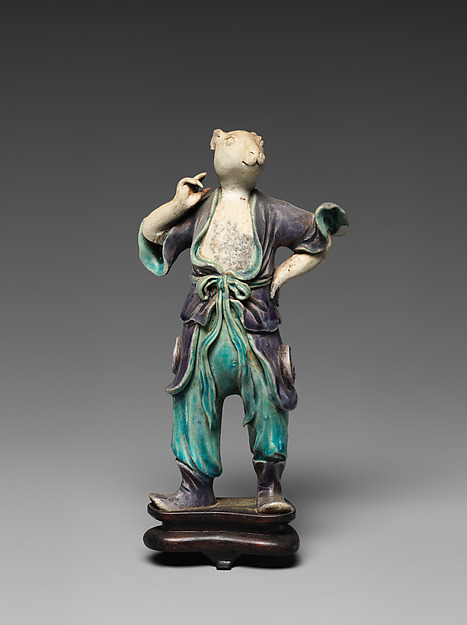
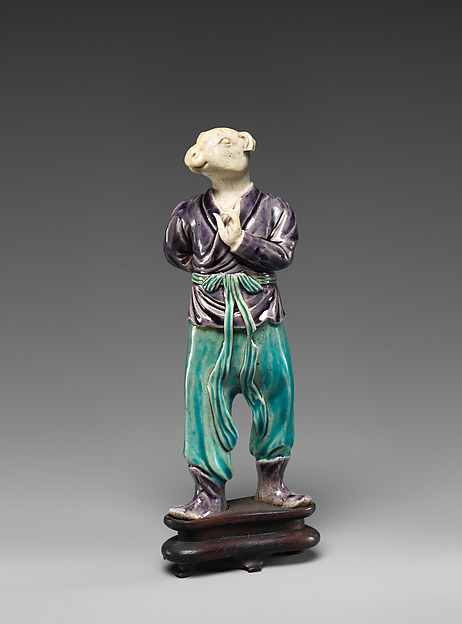
One direct link — Six Harmonies — and nothing else
Each zodiac animal maps to one of the twelve Earthly Branches (地支), the markers used in the traditional calendar and in BaZi — the birth-chart method read from a person’s year, month, day, and hour. Words like “harmony,” “clash,” and “harm” are the technical labels classical texts attach to particular branch pairings. They name a structural relationship between two calendar signs; they are not a forecast that two people will get along or fight. Here is Rabbit (卯) and Dog (戌) run against the same seven branch schemes this site applies to all of its pairing pages.
| Branch relationship scheme | Names Rabbit + Dog? | Where each sign actually sits |
|---|---|---|
| Six Harmonies (六合) | Yes — this is the match | 卯戌合: Rabbit and Dog are a direct Six Harmonies pair, the “Secret Friends” relationship, said to combine toward Fire |
| Three Harmonies (三合) | No | Rabbit belongs to the wood trio 亥卯未 (Pig-Rabbit-Goat); Dog belongs to the fire trio 寅午戌 (Tiger-Horse-Dog) — two different trines |
| Three Meetings (三会) | No | Rabbit sits in the spring group 寅卯辰 (east / wood); Dog sits in the autumn group 申酉戌 (west / metal) — opposite seasons |
| Six Conflicts (六冲) | No | Rabbit clashes with Rooster (卯酉冲); Dog clashes with Dragon (辰戌冲) |
| Six Harms (六害) | No | Rabbit’s harm partner is Dragon (卯辰相害); Dog’s is Rooster (酉戌相害) |
| Punishments (刑) | No | Rabbit sits in the 子卯 punishment (with Rat); Dog sits in the 丑戌未 punishment set (with Ox and Goat) — but neither names the other |
| Mutual Breaks (相破) | No | Rabbit’s break partner is Horse (卯午相破); Dog’s is Goat (戌未相破) |
What Six Harmonies actually is: the sun, the moon, and the Dipper’s handle
Three Harmonies trios come from one element’s life cycle across the calendar. Six Harmonies come from the sky instead — from where the sun and moon meet each month against where the handle of the Big Dipper points. The Sui-dynasty scholar Xiao Ji set the rule out in the systematic treatise Wuxing Dayi (五行大義), under the branch harmonies: 支合者,日月行次之所合也 — “the branch harmonies are formed where the sun and moon travel and meet.” For the Rabbit-Dog pair the text reads:
二月,日月會於降婁之次,降婁,戌也,斗建在卯,故卯與戌合 — “in the second month the sun and moon meet at the station Jianglou, which is Xu (Dog); the Dipper’s handle points to Mao (Rabbit); therefore Rabbit and Dog are in harmony.”
The logic is a mirror pairing. In the month when the sun and moon conjoin at one branch, the handle of the Dipper — a traditional celestial marker used in month-direction reckoning — swings to the matching branch. The six pairs produced this way are the Six Harmonies: 子丑 (Rat-Ox), 寅亥 (Tiger-Pig), 卯戌 (Rabbit-Dog), 辰酉 (Dragon-Rooster), 巳申 (Snake-Monkey), and 午未 (Horse-Goat). Rabbit-Dog is the third of the six. The pairing has nothing to do with the two animals’ temperaments; it is a position fixed by the movement of the heavens.
One of the two cleanest: a single tie, crossing from spring to autumn
The Six Harmonies pairs are not all the same shape. Two of them — 子丑 (Rat-Ox) and 午未 (Horse-Goat) — join branches that also sit side by side inside a shared seasonal group, so those pairs carry a direct harmony link plus a season in common. Rabbit and Dog carry no such overlap. Rabbit is 卯, the heart of spring, the branch placed due east and tied in the old directional map to sunrise; Dog is 戌, the close of autumn, in the northwest-to-west quadrant toward the end of the year. The two belong to opposite seasonal quarters and sit well apart on the branch wheel, but they are not direct opposites: Rabbit’s opposite is Rooster (卯酉冲), and Dog’s is Dragon (辰戌冲). The Six Harmonies link is the single thread that crosses that distance.
There is a quiet symmetry the folk matchmaking columns never spell out. In the two “opposition” schemes — the Six Clashes and the Six Harms — Rabbit and Dog point at the very same two signs: Dragon and Rooster. Rabbit clashes with Rooster (卯酉冲) and is harmed by Dragon (卯辰害); Dog clashes with Dragon (辰戌冲) and is harmed by Rooster (酉戌害). The roles simply swap. (Their punishment and break partners are other signs — this symmetry is specifically about clash and harm.) And those two opponents, 辰酉, are themselves a Six Harmonies pair — the Dragon-Rooster “Secret Friends.” So two harmony couples sit across the wheel from each other, each sign in one pair set against both signs in the other by a clash and a harm. It is a pattern in the branch arithmetic, not a ranking of anyone’s match.
The element the pair is said to form: Fire, and why the reading hangs together
Each Six Harmonies pair is traditionally assigned a “combined” element — the one it is said to lean toward when the two branches sit together in a chart. For 卯戌 the sources are unusually consistent: the assigned element is Fire (卯戌合化火). Where 午未 (Horse-Goat) is argued over between Earth, Fire, and a Sun-Moon reading, the Rabbit-Dog assignment is given as Fire across the common conventions — and it carries an internal logic the plain branch elements do not show on the surface.
Rabbit’s branch 卯 is Wood; Dog’s branch 戌 is Earth in the ordinary list. Neither is natively Fire. The Fire assignment is the documented convention — Yuanhai Ziping and later BaZi texts list 卯戌合火 outright — and a later explanatory reading makes it internally coherent, resting on two classical facts. First, 木生火 — Wood generates Fire, so Rabbit’s wood is fuel. Second, 戌 is the fire reservoir: in the Three Harmonies fire trine 寅午戌 (Tiger-Horse-Dog), the three branches mark fire’s birth (寅), peak (午), and storage (戌), so Dog’s branch is where that trine banks its fire — the Sanming Tonghui states plainly that 戌为火库 (Dog is the storehouse of Fire). Read that way, Rabbit’s wood kindles the fire Dog’s branch already holds in reserve. That is a way later technical logic makes sense of an already-established convention, not a documented account of why the Fire assignment arose. What is fair to say is that, however it originated, the Fire reading hangs together more tidily than the contested elements of some other pairs.
Check that these are really the two signs
A pairing reading describes the right two signs only when each birthday actually falls in the zodiac year it seems to — and the dividing line is not January 1. Under the lunar-zodiac convention this site follows, the animal year turns over at Lunar New Year, which lands anywhere from about January 21 to February 20 depending on the year. A birthday in January or early February can therefore still belong to the previous animal year. The most recent Dog year gives a clear example of the boundary trap: 2018 (戊戌, Earth Dog) did not begin until February 16, 2018 — one of the later New Years on the calendar — so anyone born between January 1 and February 15 that year, assuming they are a Dog, is in fact a 2017 Rooster. That is a sharp case here, because Rooster is the sign Dog is in a 六害 (harm) relationship with (酉戌相害) — the boundary error would move the person onto one of Dog’s friction signs, not a neutral one. Rabbit shows the trap in the other direction: the 2023 Rabbit year (癸卯, Water Rabbit) began early, on January 22, 2023, so a birthday in the first three weeks of that January is still the 2022 Tiger.
Many BaZi practitioners instead start the astrological year at Lìchūn (立春), the solar term around February 3–5, which falls at a precise clock time rather than across a whole day — so a birthday on the boundary date itself needs the exact birth time and place to settle. If either person here has a January or early-February birthday, confirm the sign against the real date before reading the match; both can be checked on the compatibility hub’s calculator.
Rabbit’s side: a spring wood sign with one autumn tie
Rabbit is the fourth branch (卯); this site’s Rabbit profile and Year of the Rabbit page read the sign around gentleness, caution, and a pull toward quiet and safety. Against Dog the one link is the Six Harmonies pairing traced above; nothing else in the seven schemes connects the two. In the Fire reading of the pair, it is Rabbit’s wood that feeds the flame. Rabbit’s full run against all seven schemes is in the table near the top; its other close tie runs the opposite way across the calendar — the Three Harmonies wood trio with Pig and Goat (亥卯未), covered on Rabbit and Goat.
Dog’s side: the autumn earth branch that banks the fire
Dog is the eleventh branch (戌); this site’s Dog profile and Year of the Dog page center the sign on loyalty, watchfulness, and a protective streak. Against Rabbit the one direct tie is again the Six Harmonies pairing. Dog’s branch is Earth in the ordinary list, but it also serves as the storehouse of fire in the 寅午戌 trine — the structure a later reading points to when it explains why the 卯戌 convention is assigned Fire rather than either branch’s surface element. Dog’s other close tie is that very fire trine with Tiger and Horse (寅午戌), a different kind of link covered on Tiger and Horse.
What that leaves for the actual pairing
Stripped of the hype, the pairing comes to this: Rabbit and Dog are a genuine Six Harmonies pair — one of six in the system, and one of the two cleanest single-link cases across the seven branch schemes checked here, with no clash, harm, punishment, or break between them. It is a clean classical picture, but a calendar fact, not a personality match, and not a reason to rank the pair above any other. The site’s separate Rabbit and Dog profiles describe character — Rabbit cautious and peace-seeking, Dog loyal and protective — and a reader may see the Dog’s steadiness reassuring the wary Rabbit, or two careful signs who both prize security finding it easy to trust each other. Either is an interpretation laid over the classical fact, not something the branch schemes measure, and not a score or advice about a particular couple.
How the match reads in folk marriage lore
Chinese folk and popular matchmaking materials commonly present Rabbit-and-Dog as an auspicious pairing, and the pair has its own line in a recorded six-harmony marriage rhyme: 青兔黄狗古来有, “a green Rabbit and a yellow Dog, a match since of old.” The colors are the five-element tints — blue-green for Rabbit’s wood branch, earth-yellow for Dog’s — and the line sits alongside the other five harmony pairs in the same jingle. How old the rhyme is this page does not claim; what is documented is that it was written down in local gazetteer material and is still repeated as folk custom, reported here as tradition rather than as advice about any real marriage. This site decodes that rhyme line by line.
Modern Chinese relationship columns tend to frame the pair as “the protector and the protected” — the Dog guarding and reliable, the Rabbit gentle and conflict-averse — warm when the Rabbit trusts and the Dog does not smother, strained when the Dog’s vigilance reads as control or the Rabbit’s avoidance reads as evasion. It is a present-day characterization, not a measurement of any couple, but a useful corrective to the flat high-score headline.
A contemporary footnote: when the 卯戌 link turns up in year forecasting
The same 卯戌 link appears in present-day zodiac-year writing. Because the Dog’s branch 戌 forms 六合 with the Rabbit’s natal-year branch 卯, contemporary 流年 columns describe a Dog year as a 合太岁 (harmony-with-the-year) year for Rabbit-born people, and a Rabbit year the same way for Dog-born people. The most recent Rabbit year was the Water Rabbit (癸卯), which began January 22, 2023; the next Dog year, the Metal Dog (庚戌), begins February 3, 2030. That is a modern application of the pairing, not a promise that the year runs smoothly for everyone born under either sign — the structural 六合 says nothing on its own about how a year turns out.
Read it for two real charts
Everything above is the general pattern for the sign pairing. For two specific people rather than a generic reading, these go further:
Couple Compatibility Report — both birth charts side by side: how the two signs and their elements read together, where they align and where they pull apart. See the report →
Personalized Reading — one person’s full stem-branch write-up: element balance, the signs they traditionally match or clash with, and year-specific traditional symbolism. See the reading →
Common mistakes
- Taking “Secret Friends” as a compatibility verdict. Six Harmonies (六合) is a structural branch pairing drawn from sky-geometry. “Secret Friends” is a loose English gloss for it; neither the term nor the pairing is a ruling that any Rabbit and any Dog will get along.
- Reading “one link” as a weak match. Rabbit and Dog meet at a single scheme — the Six Harmonies pair — and sit apart in the other six. Fewer ties does not mean a worse pairing; the number of branch relationships describes the calendar, not a compatibility score.
- Reading the branches’ own elements as the pair’s element. Rabbit’s branch is wood and Dog’s is earth in the ordinary list; the pair is read as combining toward Fire (卯戌合化火), a convention a later reading links to Rabbit’s wood generating fire and Dog’s branch storing it as the reservoir of the 寅午戌 trine. The combined element is a separate layer, not a sum of the two branch elements.
- Treating a “combined element” as automatic. BaZi authors set conditions before a combination transforms anything (adjacency, a supporting season, a matching stem). Without them it is a link, not a completed transformation.
- Assuming a Dog born in early 2018 is really a Dog. The 2018 Dog year began on February 16, so a January or early-February 2018 birthday is a 2017 Rooster — which is one of Dog’s friction signs. Check the boundary.
- Expecting a percentage score. The Six Harmonies pairing and the Fire reading do not produce a figure like “95% compatible.” That number format is a modern overlay, not an output of the classical system.
Rabbit and Dog compatibility: FAQ
Are Rabbit and Dog compatible in the Chinese zodiac?
Rabbit and Dog are a Six Harmonies pair (卯戌合), often translated “Secret Friends.” That is their one direct two-branch relationship, and it is the only scheme that connects them — they are not in the same Three Harmonies trio or seasonal group, and no clash, harm, punishment, or break rule sits between them. It is a clean classical picture, but a symbolic structure, not a compatibility score or a verdict on a couple.
Why are Rabbit and Dog called Secret Friends?
“Secret Friends” is the common English label for a Six Harmonies (六合) pair. The pairing comes from classical sky-reckoning: as the Sui-dynasty text Wuxing Dayi puts it, in the second month the sun and moon meet at the station Jianglou (Dog, 戌) while the Dipper’s handle points to Rabbit (卯), so the two branches are paired. The six such mirror pairs are the Six Harmonies, and Rabbit-Dog (卯戌) is the third of them.
What element do Rabbit and Dog combine into?
Fire (卯戌合化火). Unlike Horse-Goat, whose combined element is argued over, the Rabbit-Dog assignment is consistently Fire. A later reading makes it internally coherent — Rabbit’s branch 卯 is Wood, which generates fire (木生火), and Dog’s branch 戌 is the fire reservoir of the 寅午戌 trine — but that is a way of making sense of an established convention, not a documented account of its origin. Most sources treat a combined element as a tendency under set chart conditions, not an automatic transformation; neither person needs to be born in a Fire year.
Do Rabbit and Dog clash in the Chinese zodiac?
No. In Six Conflicts (六冲), Rabbit clashes with Rooster (卯酉冲) and Dog clashes with Dragon (辰戌冲) — not with each other. Rabbit and Dog are also not paired in Six Harms, Punishments, or Mutual Breaks. Their one link across the seven schemes checked here is the Six Harmonies pair.
Is a January or early-February birthday a problem for this reading?
It can be. Under the lunar-zodiac convention used here, the animal year changes at Chinese New Year (roughly January 21–February 20, varying yearly), so a January or early-February birthday may belong to the previous animal year. For example, the 2018 Dog year did not start until February 16, 2018, so a birthday before then is a 2017 Rooster; the 2023 Rabbit year began early, on January 22, 2023. Many BaZi practitioners instead use the exact moment of Lìchūn (around February 3–5). Births in those windows should be checked against the relevant year’s boundary.
Is this page a substitute for a personalized reading?
No. It explains the general cultural pattern for the Rabbit-Dog pairing as a symbolic tradition — not a prediction, and not medical, financial, or relationship advice. For two specific birth charts, see the Couple Compatibility Report linked above.
Where to go next
Editorial note
Sources are separated by claim so the classical and later layers stay distinct. The seven branch-relationship schemes checked here follow this site’s own reference pages: the Six Harmonies pairing and the clash/harm/punishment/break relationships follow the Six Harmonies and enemies-and-friends reference pages; the Three Harmonies trios and the Three Meetings seasonal groups follow the Three Harmonies page. Six Harmonies mechanism: the Sui-dynasty Wuxing Dayi (五行大義, Xiao Ji) — 支合者,日月行次之所合也……二月,日月會於降婁之次,降婁,戌也,斗建在卯,故卯與戌合 — explains the branch Six Harmonies through the sun-moon meeting against the Dipper’s handle; verified verbatim on Wikisource. Combined element (Fire): 卯戌合化火 is the documented convention in 子平 / BaZi texts (e.g. Yuanhai Ziping); the 木生火 (Wood generates Fire) and 戌-as-fire-storehouse (戌为火库, documented in the Ming Sanming Tonghui 三命通會, which lists 寅午戌 as the fire trine with 戌 its 库) reading offered here is a later rationalization of that established convention, not a documented account of its origin. Combined elements are treated as conditional chart tendencies, not automatic transformations. Directional and seasonal placements (卯 due east / mid-spring, 戌 in the western autumn quadrant; the 寅卯辰 spring and 申酉戌 autumn Three Meetings groups) follow the branch-direction mapping in the Han Huainanzi “Tianwen” and the Sanming Tonghui. Folk-custom illustration: 卯戌 (Rabbit-Dog) appears as an auspicious line — 青兔黄狗古来有 — in a recorded six-harmony marriage-matching rhyme (logged in this site’s reference material from a 1928 房山县志 source, its age not claimed here), cited as recorded folk tradition, not factual guidance; the modern “protector and protected” characterization is reported as present-day observation. This page offers a cultural and classical lens on the Rabbit-and-Dog pairing for interest and education. It is not a prediction, and not medical, financial, or relationship advice.