
Chinese New Year 2027: Saturday, February 6 — the Year of the Fire Goat
The next Chinese New Year lands on Saturday, February 6, 2027, opening the Year of the Fire Goat (丁未 dīng wèi, the “Red Goat” year). It runs until January 25, 2028. Here is the exact date, the one boundary that trips people up, and the old worry about Goat-year babies — with the real numbers behind it.
Chinese New Year 2027: the quick answer
When is it?
Saturday, February 6, 2027. That is day one of the lunar year. The festival stretch — reunion dinner the evening before, then the first days of visiting — centres on that date.
Which animal?
The Fire Goat (丁未 dīng wèi). The Goat year runs February 6, 2027 to January 25, 2028; the next lunar year, the Earth Monkey, begins January 26, 2028.
The 2027 dates to put in your calendar
| Occasion | Date | What it marks |
|---|---|---|
| Lichun, Start of Spring | Thursday, February 4, 2027, 09:46 (UTC+8) | The solar-term boundary used by many BaZi methods. |
| New Year’s Eve | Friday, February 5, 2027 | Reunion dinner; the final lunar month ends on day 29 this time. |
| Chinese New Year’s Day | Saturday, February 6, 2027 | Lunar day one; the Fire Goat year begins. |
| Second lunar day | Sunday, February 7, 2027 | A family-visiting day in some local traditions. |
| Lantern Festival | Saturday, February 20, 2027 | Day fifteen of the first lunar month. |
| Last day of the Fire Goat lunar year | Tuesday, January 25, 2028 | The Goat year continues into the next Gregorian year. |
| Next Lunar New Year | Wednesday, January 26, 2028 | The Earth Monkey lunar year begins. |
The Chinese lunar calendar is compiled under national standard GB/T 33661-2017, using Beijing time (UTC+8). As checked on October 23, 2026, Purple Mountain Observatory’s calendar-materials list does not yet include 2027. The dates here have been cross-checked against the Hong Kong Observatory’s published 2027 conversion table and 2028 conversion table. A local lantern event can have its own opening dates; February 20 is the festival date, not an event booking.
Why February 6 — and the two days most date pages skip
Chinese New Year moves because it tracks the moon, not the fixed solar calendar. It usually falls on the second new moon after the winter solstice — with rare exceptions from the leap-month rules — so it drifts between late January and late February. In 2026 it was February 17; in 2027 it is eleven days earlier, February 6.
Here is the catch almost every “2027 date” page leaves out. Lìchūn (立春), the solar start of spring, falls on February 4, 2027 — two days before the lunar New Year. That opens a small gap where the two ways of counting a zodiac year disagree. The split begins at the precise Lìchūn moment — about 9:46 a.m. China Standard Time on February 4, 2027. Before that moment, both conventions still read the Fire Horse year. After it, but before the Lunar New Year on February 6, the Lìchūn-based BaZi year pillar is already the Fire Goat, while the lunar-zodiac year stays the Fire Horse until February 6. For a birth near that boundary, the exact time of day and the time zone decide which it is.
This page uses the lunar-year convention, the standard answer to “what animal am I.” If you are working out a BaZi chart instead, use the Lìchūn boundary and the exact time of birth.
A January or February 2027 birthday: which label applies?
| Birth date or time in UTC+8 | Lunar-year animal | Lichun-based BaZi year pillar |
|---|---|---|
| January 1 through February 4, before 09:46 | Fire Horse | Fire Horse |
| February 4 from 09:46 through February 5 | Fire Horse | Fire Goat |
| February 6, 2027 through January 25, 2028 | Fire Goat | Fire Goat |
The Observatory’s solar-term times put Lichun at 09:46 Hong Kong Time (UTC+8), or 01:46 UTC, on February 4. A birth on February 4 needs its recorded time compared with that instant, using the correct time zone. February 5 is wholly inside the gap between the two conventions. The columns describe different year-counting rules; neither is a complete birth chart.
What a “Fire Goat” year actually is
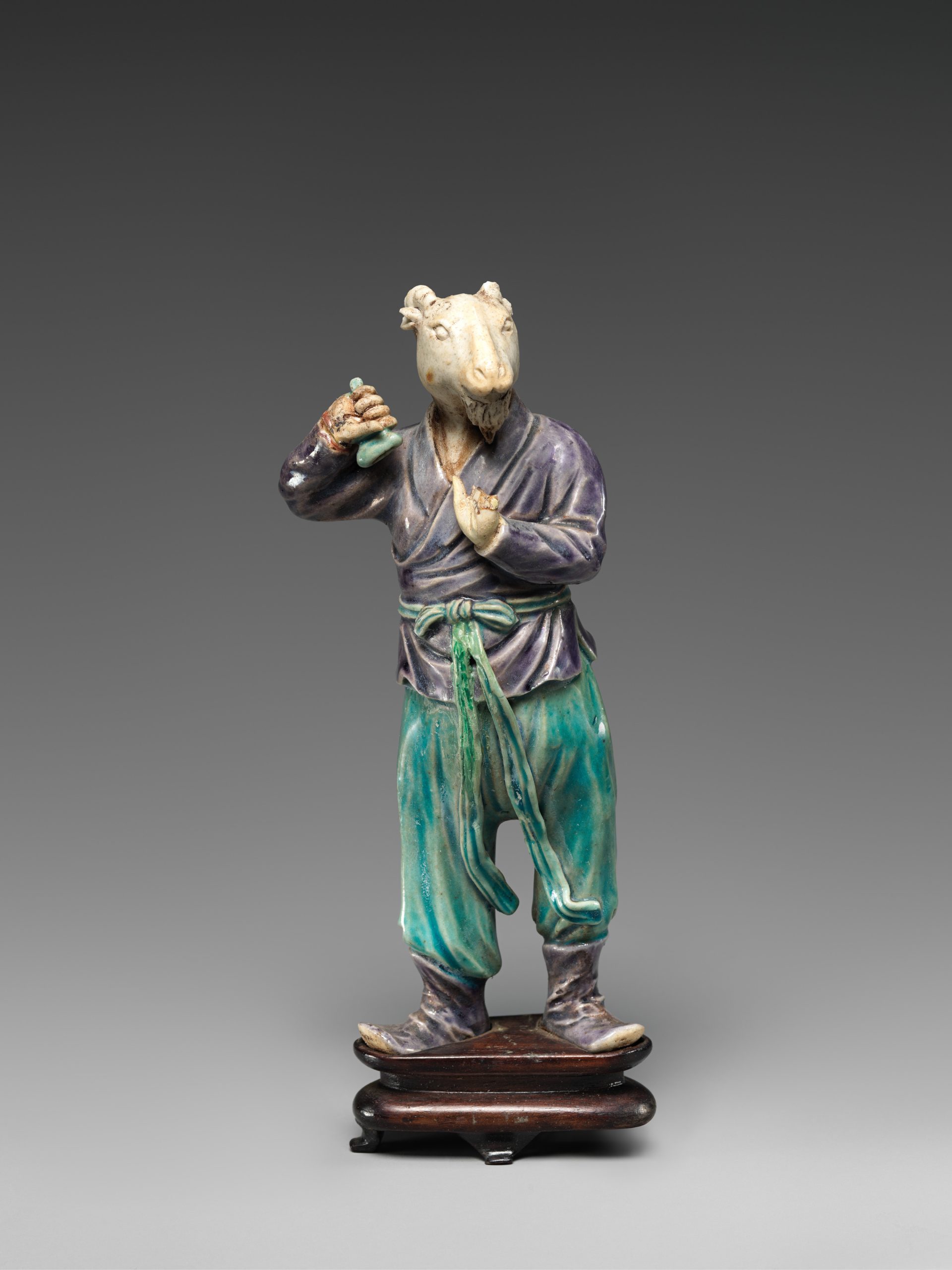
Every year carries one of the twelve animals plus one of the five elements. 2027 pairs yin Fire with the Goat — stem-branch 丁未 — which is why older almanacs call it the Red Goat (红羊) year. The Goat’s own fixed element is Earth, so the Fire of 2027 sits on top of that, traditionally read as a warmer, more outwardly expressive layer over the Goat’s usual quiet. In symbolic terms the Goat stands for gentleness, patience and craft rather than force. None of that is a personality test or a forecast — it is the traditional image attached to the year, nothing more.
How 2027 is celebrated, and the dates that matter
The festival is more than a single day. The reunion dinner (年夜饭 nián yè fàn) falls on New Year’s Eve, February 5, 2027; the first day of the new year is February 6, when families visit and children receive red envelopes (红包 hóng bāo) of lucky money. The celebration traditionally runs fifteen days and closes with the Lantern Festival (元宵节 yuán xiāo jié) on February 20, 2027, the fifteenth day of the first lunar month and traditionally tied to the year’s first full moon.
One festival, different family visiting days
Reunion meals, greetings to relatives, lucky money for children and lantern activities all appear in the national intangible cultural heritage record for Spring Festival. The order of visits can be much more local.
In Guangzhou’s Huadu district, the local culture bureau’s account describes red packets after midnight on New Year’s Eve and married daughters visiting their parents on the second lunar day. In 2027, that day is February 7. For a visit to someone’s home, ask which meal or day the family keeps; this local account does not set a timetable for every household.
Are all fifteen festival days public holidays?
No. The fifteen celebration days are not a fifteen-day statutory holiday. In mainland China, the State Council rule effective from January 1, 2025 sets four statutory Spring Festival holidays: Lunar New Year’s Eve and the first three days of the first lunar month. The complete 2027 holiday and adjusted-workday schedule will be set by the General Office of the State Council’s annual notice; it had not been published as of October 23, 2026.
As a separate regional example, Hong Kong’s published general-holiday list for 2027 names February 6, 8 and 9 for Lunar New Year. February 7 is a Sunday; February 9 is the substitute general holiday for the second lunar day. New Year’s Eve, February 5, is not a listed general holiday.
Those dates apply to Hong Kong’s general-holiday calendar. Check your workplace’s arrangements alongside the applicable official notice. A reunion dinner, a local parade or the Lantern Festival does not by itself establish how many days you have off.
Is 2027 a bad year to have a baby? The worry, and the real numbers
Start reading about 2027 and you will quickly run into a hesitation that still shapes real decisions in China today. There is a blunt folk saying — 十羊九不全 (shí yáng jiǔ bùquán), “of ten goats, nine are incomplete” — taken to mean most people born in a Goat year will have a hard life. One folk explanation ties the saying to the fate of livestock raised for slaughter, though folklore researchers have questioned that as a later rationalisation rather than a documented origin.
It is not only talk. During 2015 — the Gregorian year that mostly overlapped the last Goat year — China’s official statistics recorded 16.55 million births, about 320,000 fewer than in 2014. A national family-planning official said some parents were holding off until the following Monkey year, though the yearly drop cannot be put down to superstition alone — the number of women of childbearing age was falling too. Zodiac preferences have measurably shifted birth timing in some documented cases — Dragon-year births and this 2015 Goat-year dip among them — even if they do not make a universal rule for national birth totals (reported by the Irish Times).
But here is what the superstition quietly admits about itself. Even in folk belief, not every Goat is doomed — it supposedly depends on the birth season. The reasoning follows the animal: a goat born when grass is plentiful (roughly the fourth to seventh lunar months — about May to August in 2027) “eats well” and is lucky, while a “hungry goat” born in deep winter is the unlucky one. There is even a saying, 属羊难得四月羊 — a fourth-lunar-month Goat is the one to envy. A belief that has to carve out its own exceptions by the calendar is not a verdict on anyone.
It is also newer than it sounds. Some folklore accounts trace the saying’s spread to the late Qing and tie it to political attacks on prominent people born in Goat years, though its precise origin is uncertain. In much older usage the goat was plainly auspicious: the character 羊 appears as a component in words like auspicious (祥), beautiful (美) and good (善), and early Chinese inscriptions used 吉羊 as a variant of 吉祥, with 羊 standing in for 祥. We cover the competing origin stories on our unlucky signs page.
So if you are weighing a 2027 baby: this is cultural context, not a prediction and not advice. A Fire Goat child is, traditionally, read as gentle and creative — and plenty of parents pick the Goat year on purpose for exactly that reason.
Planning around the Fire Goat year?
If 2027 matters to you — a wedding, a move, or a baby due around the boundary — a personalised reading works out the exact Fire Goat details for a specific birth date and time, including which side of the February 4–6 seam it falls on.
Keep reading
Chinese New Year 2027 FAQ
For birth-year dates and the meaning of the Fire Goat label, see the 2027 Chinese zodiac guide.
When is Chinese New Year 2027?
Saturday, February 6, 2027. The reunion dinner is the evening before, on February 5.
What animal is 2027?
The Fire Goat. The year runs from February 6, 2027 to January 25, 2028.
Why is Chinese New Year 2027 earlier than 2026?
The date follows the lunar calendar, so it shifts each year. 2026 fell on February 17; 2027 is eleven days earlier, on February 6.
Is 2027 a good year to have a baby?
Traditionally some parents avoid Goat years because of the saying “of ten goats, nine are incomplete,” and births did dip in the last Goat year. It is a folk superstition, not a verdict — even the belief ties luck to the birth season rather than condemning every Goat.
When does the Year of the Fire Goat end?
On January 25, 2028. The next lunar year, the Earth Monkey, begins January 26, 2028.
For a comparison with your own birth sign, the 2027 guide to all twelve zodiac signs sets out the traditional relationship of each sign with the annual Goat. It keeps the named pairs, partial three-sign groups and Tai Sui labels distinct.
Editorial note. Calendar facts on this page — the February 6, 2027 New Year date, the February 4 Lìchūn boundary, the 2015 birth figures — are verifiable. The Fire Goat’s symbolic traits and the “unlucky Goat” belief are traditional folklore, shared here as culture, not as fortune-telling, prediction, or advice about real-life decisions.